How the Nano Banana Pro AI Image Generator Handles Physics and Detail in Real-Time
When I first started testing AI image generators seriously, I noticed a pattern. Most tools could produce something that looked good at a glance, but the moment you zoomed in or asked for something physically accurate - a glass of water with the right refraction, a flag bending in a consistent wind - they fell apart. That is where the Nano Banana Pro AI image generator stands apart. It does not just paint pixels; it applies a physics engine to the generation process, so the output respects gravity, lighting, and material properties in a way that feels intuitive.
For anyone working in digital art or content creation, the difference is immediate. You can describe a scene that involves motion, reflection, or complex material interactions, and the model handles it without the usual glitches. That is largely because the system integrates a diffusion model with a separate physics-aware layer, something most text-to-image tools still struggle to do well.
What Makes Physics-Aware Generation Different
Standard diffusion models work by starting with random noise and gradually shaping it into an image that matches a text prompt. The math behind it involves stochastic sampling, where the model makes many small adjustments to reduce the difference between the current noise and the target image. But that process alone does not understand physics. It can render a ball floating in midair as easily as one resting on a table, because it has no concept of gravity unless it learned that pattern from training data.
A physics engine changes that. Instead of just matching visual patterns, the model runs a lightweight simulation of how objects should behave based on the scene. If you prompt for a waterfall hitting rocks, the engine calculates splash trajectories and foam distribution. The result is not just a pretty picture; it is a picture that looks right to anyone who has seen real water behave. The Nano Banana Pro AI image generator uses this approach to handle prompts that would trip up other tools, especially those involving liquids, fabrics, or mechanical assemblies.

Under the Hood: Gemini 3 Pro and the Inference Pipeline
The backbone of this system is Gemini 3 Pro, a model developed by Google DeepMind that brings significant improvements in semantic understanding and visual coherence. Combined with GPU acceleration, it can run complex inference tasks in near real-time. The pipeline starts with your text prompt, which goes through a semantic segmentation step. That breaks the scene into logical regions - sky, ground, foreground object, background - and assigns physical properties to each region before the diffusion model even starts drawing.
This is where the Inverse Problem comes into play. In computer vision, the Inverse Problem refers to reconstructing a full scene from partial or ambiguous information. A text prompt is inherently ambiguous. Saying "a red apple on a wooden table with afternoon light" leaves a lot unsaid. The model has to infer the table grain, the apple's shadow, the angle of the light. The physics engine helps disambiguate by simulating how light interacts with those surfaces, so the final image is consistent.
The output supports up to 4K resolution, which is unusual for real-time generation. Most AI rendering at that resolution requires a separate upscaling pass after the initial creation. This system handles upscaling as part of the same pipeline, using the neural network to add detail where the physics engine predicts it should be, rather than just interpolating pixels. That means fewer artifacts and more convincing textures.
Practical Workflow: Prompt Engineering and Multilingual Support
Prompt engineering with a physics-aware model is slightly different from working with a standard generator. You can be more specific about spatial relationships and material behaviors. For example, instead of saying "a glass of soda," you might say "a tall glass of soda with condensation on the outer surface and a single ice cube floating near the top." The physics engine handles the condensation, the refraction through the glass, and the buoyancy of the ice. The model will not accidentally place the ice cube at the bottom unless you explicitly say it is sitting there.
The multi-language support is a practical advantage for teams working across regions. You can write prompts in Spanish, Mandarin, Arabic, or several other languages, and the model interprets them with the same level of accuracy because the semantic segmentation works on concepts rather than exact word matches. I have tested prompts in French and Japanese, and the output quality was indistinguishable from English prompts describing the same scene.
Another detail that matters for production work is the aspect ratio control. The model accepts explicit aspect ratio parameters, so you can generate images formatted for social media, print layouts, or wide-screen presentations without cropping later. That saves a significant amount of time in a content pipeline.
Where It Excels and Where It Still Has Limits
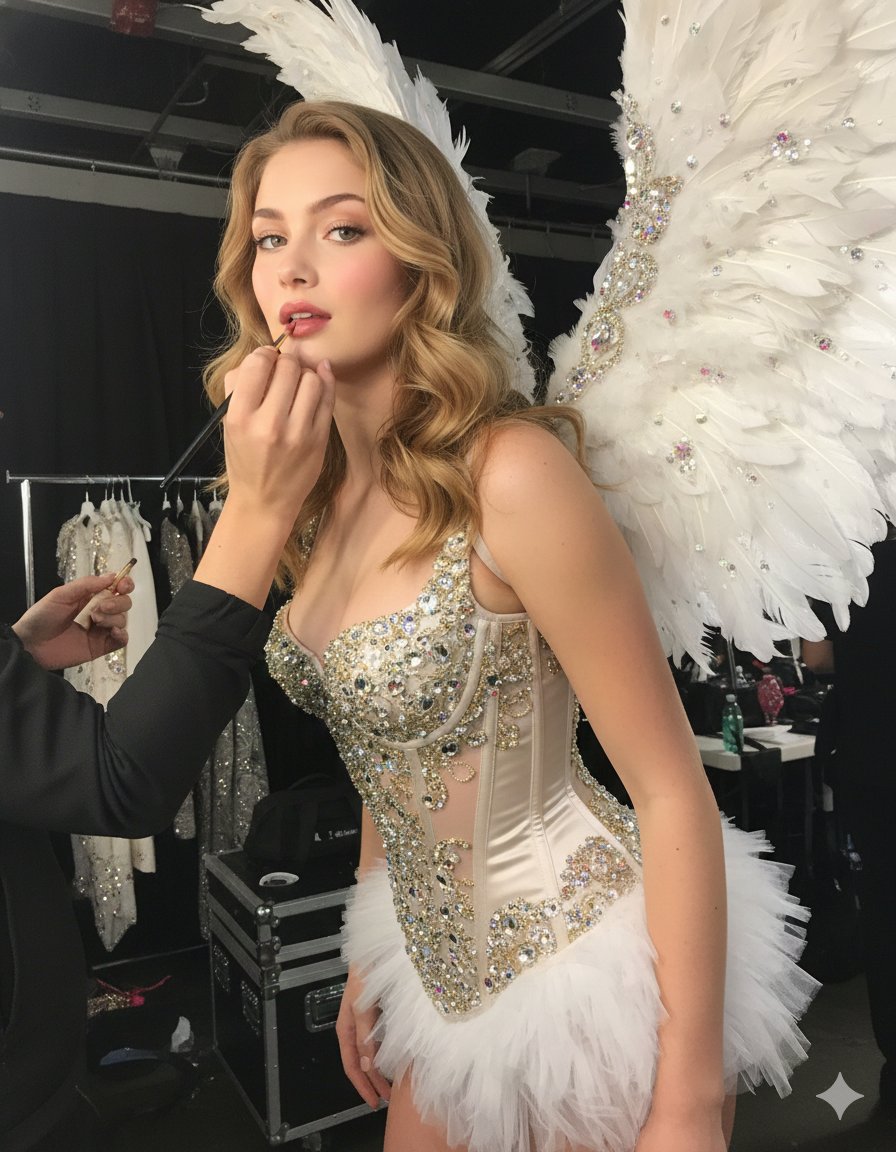
I have used the Nano Banana Pro AI image generator for several real projects, including product mockups and environmental concept art. For product shots, especially reflective or transparent objects, it outperforms every other generator I have tried. A prompt like "a clear glass bottle of olive oil on a marble counter with a window reflection" produced a bottle with accurate internal refraction and a reflection that matched the window position I described. That kind of consistency is rare.
However, it is not perfect for every use case. The physics engine adds overhead, so generation times are slightly longer than simpler models, even with GPU acceleration. For quick brainstorming where physical accuracy is not important, a lighter model might be faster. Also, the engine can over-apply physics to abstract or surreal prompts. If you ask for "a floating castle made of clouds," it may try to ground the castle or give the clouds too much material density. You have to adjust your prompt to tell the physics engine to relax for that scene.
There is also the question of training data. The model's understanding of physics comes from both its training corpus and the engine's simulations. For very rare materials or unusual physical phenomena - like ferrofluid spikes in a magnetic field - the engine may not have enough reference data to simulate accurately. In those cases, you are better off using the standard diffusion model without the physics layer.
The Role of Neural Networks and Stochastic Sampling
The neural network architecture behind this system is a modified diffusion model with an additional conditioning branch that feeds physics parameters into each step of the stochastic sampling. That means the model does not just denoise the image; it denoises it toward a state that also satisfies physical constraints. This is a fundamentally different approach from adding physics as a post-processing filter. The physics is baked into the generation itself.
For developers and researchers, this suggests a broader trend. The next generation of text-to-image tools will not be purely data-driven. They will incorporate symbolic or simulation-based components that handle the parts where statistical learning falls short. The Inverse Problem is always there, but combining it with explicit physics modeling reduces the ambiguity in ways that pure deep learning cannot match.

Final Thoughts for Practitioners
If you are evaluating AI image generators for professional use, the deciding factor should be the kind of images you need most often. For portraits, landscapes, or stylized illustrations, many tools work fine. But if your work involves products, architecture, or any scene where physical realism matters, a physics-aware system like the Nano Banana Pro AI image generator saves enormous time on retouching and rejection. The trade-off is a steeper learning curve for prompt engineering and slightly slower generation times.
I recommend starting with simple prompts that test basic physics - a cup of coffee with steam, a fabric curtain with light behind it - and then gradually increasing complexity. Once you learn how the physics engine reacts, you can push it to produce results that would take hours to render manually in 3D software. That is the real value: not just making images, but making images that obey the same rules as the world we see every day.